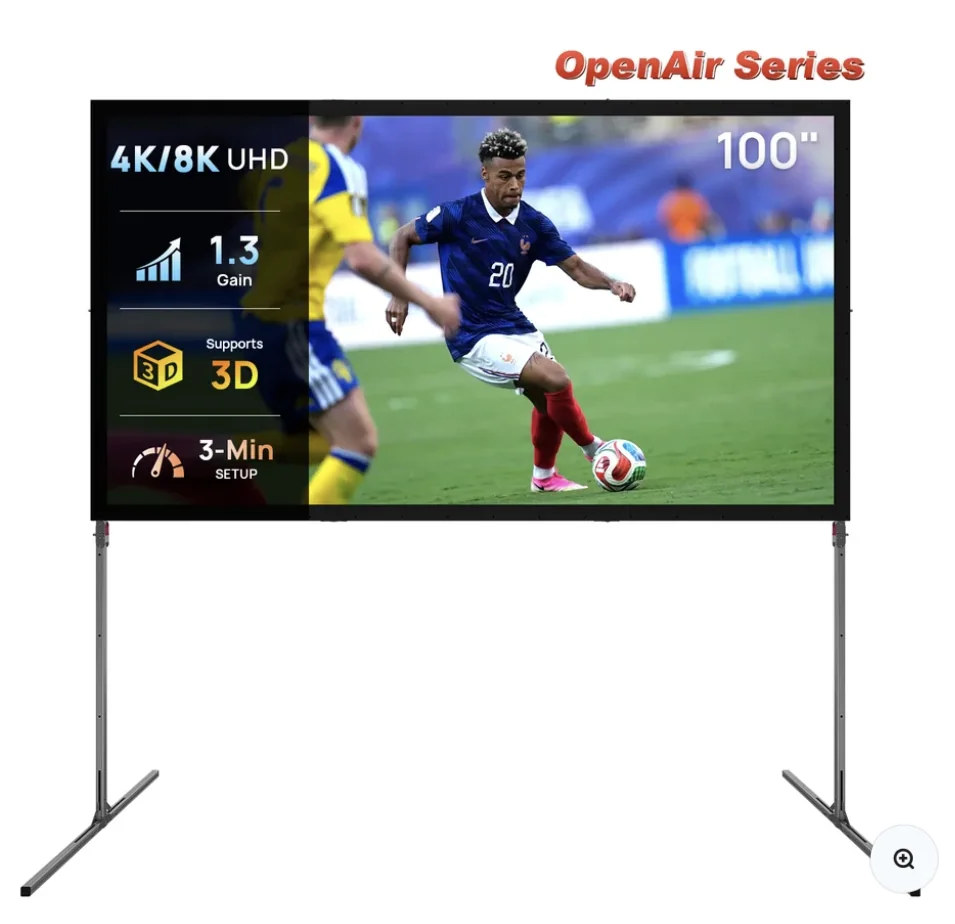
How to Choose the Best Outdoor Projector Screen
Choose an outdoor projector screen by frame rigidity, gain, backing, projector compatibility, size, portability and wind strategy.
Outdoor screens are not interchangeable. A good choice starts with the projector you already own and the way you expect to transport, assemble and stabilize the screen.
1. Start with projector type
If you use an ultra-short-throw projector, prioritize screens explicitly designed or listed for UST use. UST geometry can expose waves that look minor with long throw.
2. Decide how rigid the screen must be
Loose fabric is compact, tripods are quick, folding frames create a more defined plane, and inflatable frames trade rigid members for a blower-supported structure.
3. Treat gain as a system spec
A higher-gain surface can return more light toward viewers, but it does not create projector output. Consider gain alongside image size, projector brightness and viewing angle.
4. Check backing and rear light
Black backing helps block light from behind the surface. That can matter in yards with house lights, neighboring lighting or other sources behind the screen.
5. Plan for wind conservatively
Stakes and tie-downs improve stability; they do not turn a temporary screen into storm-rated equipment. Large screens should come down when conditions become gusty.